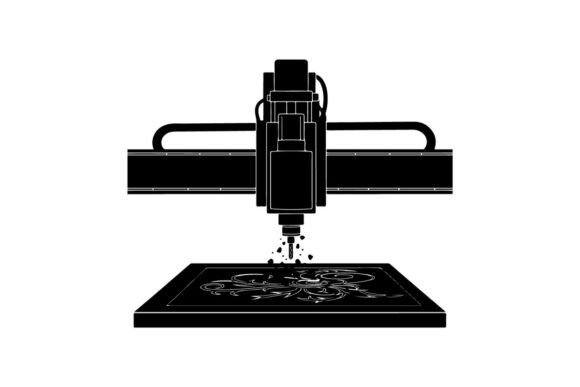
3D Printer Creating Intricate Design Vec: Enhancing Workflow with Scalable Vector Art
Integrating 3D printer technology with vector-based design assets like Minimal Silhouette Clip Art opens new possibilities for creators working across digital and physical mediums. The combination of precision 3D printing and clean, scalable vector graphics allows for seamless transitions between concept, prototyping, and final production. Whether you're designing product packaging, educational materials, or custom signage, this integration supports a streamlined workflow that prioritizes flexibility and quality.
Understanding 3D Printer Creating Intricate Design Vec
The term 3D Printer Creating Intricate Design Vec refers to the use of vector graphics in conjunction with 3D printing processes to produce detailed, multi-dimensional outputs. Vector files—such as SVG, EPS, and high-resolution PNG—are ideal for this purpose due to their scalability and precision. When used in 3D printing workflows, these vectors can guide laser cutters, CNC machines, or filament-based printers to produce accurate, repeatable shapes with clean edges and consistent detail.
Minimal Silhouette Clip Art, in particular, is well-suited for this application. Its clean lines and balanced composition translate well into 3D space, making it a versatile asset for both digital and physical design projects. Designers can import these vector files into CAD software, convert them into 3D models, and then send them directly to a 3D printer or cutting machine with minimal adjustments.
Preparing for Integration: File Compatibility and Setup
Before incorporating vector-based silhouette art into a 3D printing workflow, it's essential to ensure file compatibility. The included SVG, EPS, and PNG formats are compatible with most design software, including Adobe Illustrator, Inkscape, and Fusion 360. For 3D modeling, tools like Blender, Tinkercad, and AutoCAD allow users to import vector paths and extrude them into three-dimensional forms.
Here are a few preparation steps to consider:
- Verify that the vector paths are clean and optimized for conversion to 3D geometry.
- Use layers to separate different design elements for easier manipulation in 3D software.
- Scale the design appropriately before extrusion to maintain proportionality in the final print.
- Export the file in a format compatible with your 3D printer (e.g., STL or OBJ).
Using 3D Printer Creating Intricate Design Vec in a Project Workflow
Vector-based silhouette art can play a role at multiple stages of a project. During the planning phase, designers can use these assets to visualize how minimalist shapes will translate into 3D form. In the execution phase, the files can be imported directly into 3D modeling software to create prototypes or final prints. After production, the same vector files can be repurposed for marketing materials, packaging design, or branding assets.
For example, a small business owner creating custom signage might start by selecting a silhouette design from a vector clip art library. They can then import it into a 3D modeling tool, extrude it into a physical sign shape, and print it using a resin or filament-based printer. The same vector file can be used to create digital mockups for client presentations or printed brochures.
Workflow Examples Across Different Use Cases
Let’s explore a few practical applications where 3D Printer Creating Intricate Design Vec enhances efficiency and design quality:
1. Educational Content Creation
Teachers and instructional designers can use vector-based silhouettes to create tactile learning tools. For instance, importing a silhouette of a historical figure into a 3D modeling program and printing a small-scale model can help students better understand historical context. The vector file can also be used in digital presentations, ensuring consistency across both physical and digital resources.
2. Product Prototyping for Entrepreneurs
Entrepreneurs developing new products often need to visualize and test physical prototypes. By using minimal silhouette clip art as a base, they can quickly generate 3D models for testing form and function. The scalability of the vector files ensures that designs can be resized for different production scales without loss of detail.
3. Custom Merchandise for Small Businesses
Small business owners can integrate vector-based silhouettes into custom merchandise like keychains, coasters, or engraved plaques. The clean lines of the clip art ensure sharp output on cutting machines or laser engravers, while the vector format allows for easy customization based on customer preferences.
Maximizing Usability and Consistency
To get the most out of 3D Printer Creating Intricate Design Vec, it’s important to maintain consistency in file organization and naming conventions. Storing SVG, EPS, and PNG versions of each design in clearly labeled folders helps streamline access during different stages of a project. Additionally, keeping a library of frequently used silhouettes allows for faster iteration and reuse across multiple projects.
Designers should also consider how lighting and material choice affect the final output when printing 3D objects based on silhouette art. Matte versus glossy finishes, for example, can dramatically change the perceived detail and contrast of a design. Testing with different materials and post-processing techniques can help achieve the desired visual impact.
Long-Term Value and Adaptability
One of the greatest strengths of 3D Printer Creating Intricate Design Vec is its adaptability over time. As design tools and 3D printing technologies evolve, the vector format ensures that these assets remain usable and scalable. Whether you're working with a basic desktop printer or an industrial-grade machine, the underlying vector file remains a reliable foundation.
Additionally, the minimal aesthetic of silhouette clip art ensures that designs remain visually relevant across years of use. Unlike more trend-driven styles, clean and simple shapes tend to age well and can be easily updated with color, texture, or dimensional effects in new projects.
Conclusion
Incorporating 3D Printer Creating Intricate Design Vec into your creative process offers a powerful way to bridge digital design and physical production. Whether you're a designer, educator, entrepreneur, or hobbyist, leveraging clean, scalable vector assets in your 3D printing workflow enhances efficiency, consistency, and visual impact. With proper preparation, file management, and creative experimentation, these tools can become a core part of your design toolkit for years to come.